CASE STUDY
Back to ProjectsQUALITY & TESTING · 2025
Transit Safety & Vibration Testing Standardisation
Drop, Vibration & Incline Testing
RolePackaging Technologist
OrganizationFosroc Chemicals (Saint-Gobain)
TimelineMay 2025 – Present
Transit TestingASTM StandardsDamage PreventionPallet OptimizationCorrugated CFB
Leakage Reduction25% Less Damage
Logistics SavingsPallet Cube Optimized
Testing ProtocolStandardized ASTM SOP
Overview
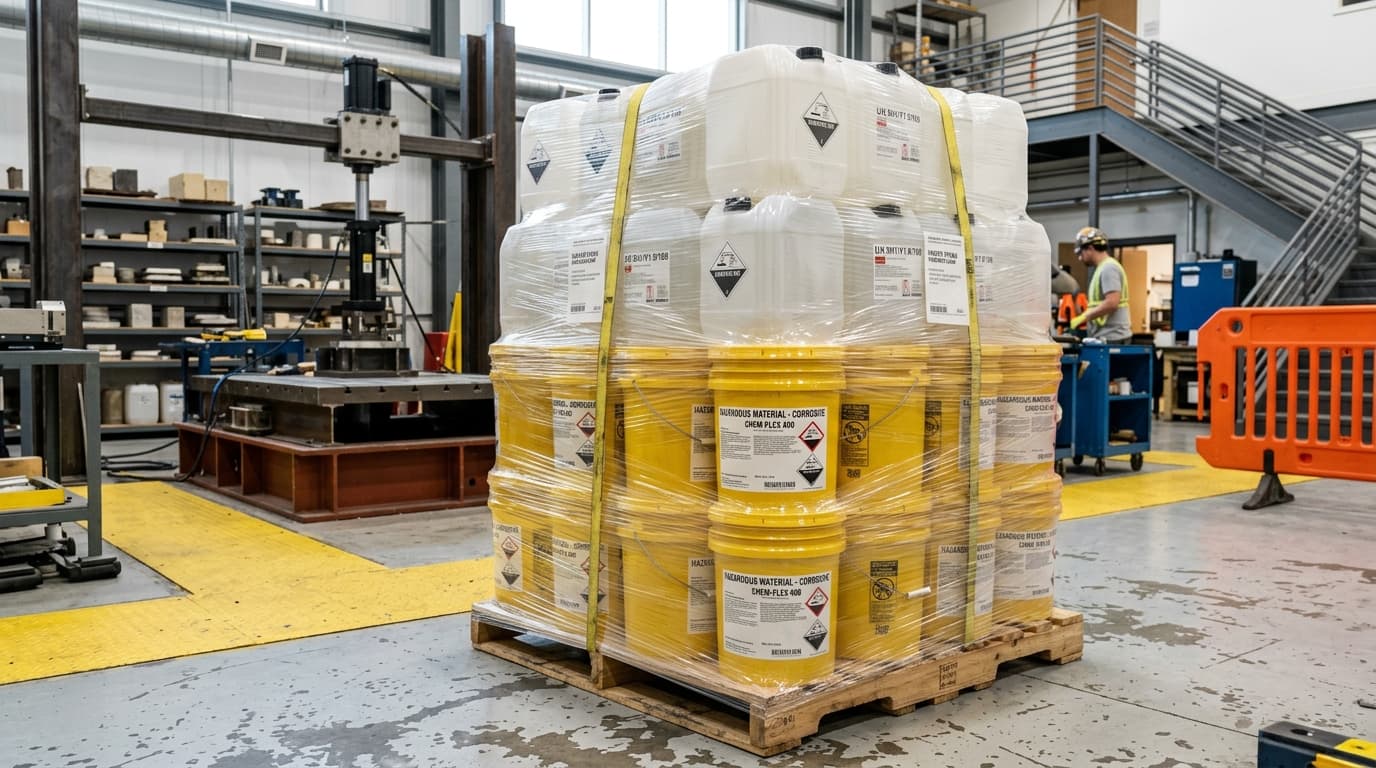
Heavy liquid construction chemicals transported across diverse road conditions in India are subjected to severe mechanical stresses: cyclic road vibrations, sudden deceleration shocks, vertical stacking compression, and thermal swings.
This engineering project standardized laboratory and field Transit Trial Procedures, optimizing pallet cube utilization and eliminating transit leakage.
The Challenge: Logistics & Freight Realities
- High-Density Products: Liquid admixtures and waterproofing compounds possess high specific gravities (>1.2), multiplying hydraulic ram pressure exerted on container closures during rough transit.
- Inconsistent Secondary Packaging: Variations in Corrugated Fibre Board (CFB) box flute strength, Bursting Strength (BS), and Edge Crush Test (ECT) values led to box creasing and secondary bottle punctures.
- Loose Pallet Configurations: Non-interlocking pallet patterns caused cargo shifting and top-tier overhang during long-haul trucking.
Technical Engineering Approach
1. ASTM Standardized Simulation Protocols
- Established rigorous standardized test procedures adhering to ASTM D4169 (Performance Testing of Shipping Containers and Systems):
- Rotary & Random Vibration Testing: Simulating 2,000 km of road transport profiles at varied resonant frequencies.
- Free-Fall Drop Testing: Structured drop sequence on container edges, closures, and base chimes from 1.2m to 1.8m.
- Incline Impact & Hydraulic Shocks: Simulating emergency braking and shunting forces.
2. Pallet Layout & Interlocking Optimization
- Re-engineered pallet stacking layouts using software-modeled column-stacking configurations, eliminating overhang and boosting top-load compressive strength by 35%.
- Implemented high-tensile stretch-wrapping tension protocols to prevent lateral load shifting.
3. Closure & Induction Seal Integrity
- Formulated torque specifications for screw caps and optimized induction heat-sealing parameters (dwell time, coil wattage, and liner backing foam resilience).
Measurable Results
- 25% Reduction in Transport-Related Leakage: Substantially reduced product return claims, transit damages, and contaminated consignments.
- Lower Secondary Packaging Costs: Optimized corrugated box flute profiles and grammages without sacrificing safety margins.
- Enterprise Testing SOP: Institutionalized the new Transit Protocol as the benchmark QA gateway for all future packaging introductions.
Previous ProjectLollipop Packaging CommercialisationNext ProjectDairy Packaging & Food Contact Materials Compliance
Next Steps
Let's ConnectCurious about sustainable packaging?
Let's connect to discuss sustainable materials, regulatory audits, or end-to-end commercialisation.